

Generative AI in Everyday Life: The Future Is Now
Generative artificial intelligence has rapidly evolved from a futuristic concept to an integral part of our daily routines, with the future arriving sooner than expected, as these sophisticated systems now power everything from the content recommendations in your social media feeds to the virtual assistants responding to your voice commands.
TL;DR
- AI medical image analysis relies on classification models like CNNs and vision transformers, while generative models such as DALL-E are used at most to create synthetic training images.
- Smart home AI reduces energy bills by up to 30% by scheduling appliances around real-time utility pricing.
- AI chatbots deliver 24/7 CBT exercises and crisis intervention, filling gaps when human therapists are unavailable.
How Generative AI Is Changing Content Creation
Generative AI tools like DALL-E, Midjourney, and ChatGPT have democratized creative production, allowing individuals without specialized training to generate impressive artwork, write compelling content, or create professional-quality videos with simple text prompts or minimal guidance.
The implications for professional creators are profound, as these technologies don’t simply replace human creativity but instead serve as powerful collaborators that can handle routine aspects of production while allowing humans to focus on conceptual direction and refinement of the final output.
Content personalization has reached unprecedented levels as generative systems analyze user preferences and behaviors to create tailored recommendations, advertisements, and entertainment experiences that continuously adapt to individual tastes and engagement patterns.
Generative AI in Healthcare and Wellness
Medical diagnostics has experienced a revolution through AI models that can analyze medical images and identify patterns invisible to the human eye. Image diagnosis itself relies on discriminative classification models such as CNNs and vision transformers, while generative models like DALL-E are used at most to create synthetic training images rather than to diagnose disease, and no such model is established as routinely surpassing experienced physicians.
Personalized treatment plans are becoming more sophisticated as AI systems synthesize vast amounts of medical literature, patient data, and genetic information to generate customized therapeutic approaches that account for individual variations in disease presentation and response to medications.
Mental health support has become more accessible through AI-powered chatbots and virtual therapists that provide 24/7 emotional support, guided meditation, cognitive behavioral therapy exercises, and crisis intervention when human professionals aren’t immediately available.
Smart Homes and Personal AI Assistants
Voice-activated assistants have evolved beyond simple command execution to become genuine conversation partners capable of understanding context, remembering preferences, and generating helpful responses that anticipate needs based on patterns of household activity.
Home automation systems now leverage generative AI to learn household routines and preferences, automatically adjusting lighting, temperature, security settings, and entertainment options based on time of day, occupancy patterns, and even detected mood states of residents.
Energy management has become remarkably efficient as AI systems analyze consumption patterns, weather forecasts, and utility pricing to generate optimal schedules for appliance usage, heating/cooling cycles, and electric vehicle charging that significantly reduce both costs and environmental impact.
Generative AI in Education and Learning
Personalized learning experiences have been transformed by AI tutors that generate customized explanations, examples, and practice problems tailored to each student’s learning style, pace, and areas of difficulty, providing education that adapts in real-time to individual needs.
Language acquisition has become more effective and engaging through AI applications that generate contextually relevant conversations, create immersive practice scenarios, and provide immediate feedback on pronunciation and grammar that continuously adjusts to the learner’s progress.
Educational content creation has been revolutionized as teachers utilize generative AI to produce varied learning materials, assessment questions, and interactive simulations that would previously have required teams of curriculum developers and significant time investments.
The Ethical Considerations of Everyday AI
Privacy concerns have intensified as generative AI systems require vast amounts of personal data to function effectively, raising questions about consent, data ownership, and the potential for sophisticated surveillance systems that can generate detailed profiles of individuals.
Bias and fairness issues persist because generative models often reflect and amplify the prejudices present in their training data, potentially producing outputs that discriminate against certain groups or perpetuate harmful stereotypes in everyday applications.
Employment disruption represents a significant societal challenge as generative AI automates tasks previously requiring human creativity and judgment, necessitating thoughtful approaches to workforce transition, education reform, and possibly new economic models to distribute prosperity.
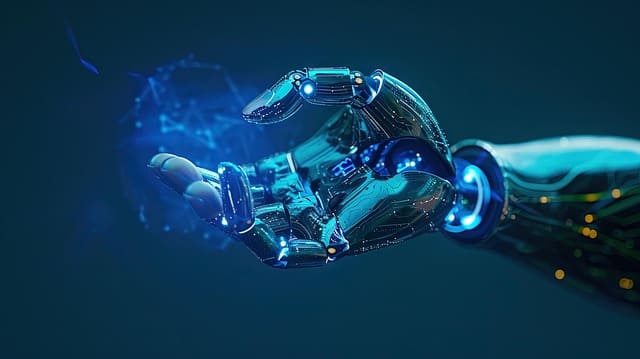 Source: Pixabay
Conclusion
Generative AI has seamlessly woven itself into the fabric of everyday life, transforming how we create, communicate, learn, and manage our environments with capabilities that seemed impossible just a few years ago.
The accessibility of these powerful tools represents a democratization of technology that enables individuals to accomplish tasks that once required specialized expertise, though this convenience comes with the responsibility to address ethical concerns around privacy, bias, and economic disruption.
As generative AI continues to evolve, the boundary between human and machine creativity will likely blur further, creating a symbiotic relationship where artificial intelligence amplifies human capabilities rather than simply replacing them, ultimately enriching our lives while challenging us to thoughtfully guide this technological revolution.
Frequently Asked Questions
-
How secure is the personal data used by generative AI systems in everyday applications?
Most reputable AI services employ encryption and anonymization techniques, but users should review privacy policies carefully as practices vary widely between companies and applications. -
Can generative AI completely replace human creativity in professional fields?
While AI excels at pattern recognition and variation generation, human judgment, emotional intelligence, and contextual understanding remain essential for truly innovative and meaningful creative work. -
What skills should people develop to remain relevant in a world with pervasive generative AI?
Critical thinking, emotional intelligence, ethical reasoning, creative direction, and the ability to effectively collaborate with AI systems will become increasingly valuable in the evolving job market. -
How can users identify content created by generative AI versus human-created content?
Detection is increasingly difficult as AI improves, but inconsistencies in reasoning, unusual phrasing patterns, and perfect adherence to prompts can sometimes indicate AI-generated content. -
Will generative AI eventually develop consciousness or self-awareness?
Current scientific consensus suggests that today’s generative AI systems, despite their impressive capabilities, operate through statistical pattern matching rather than possessing anything resembling consciousness or self-awareness.