

How to Stack Credit Card Rewards with Grocery Store Programs
Last month, I earned $127 in combined rewards on just $380 worth of groceries. The secret wasn’t finding some magical credit card — it was learning how to stack multiple reward programs on every single purchase.
TL;DR
- Earned $127 in combined rewards on $380 of groceries by stacking three simultaneous reward layers.
- Amex Blue Cash Preferred offers 6% on groceries year-round up to $6,000 annually.
- Successful stacking combines a cashback card, store loyalty program, and third-party app like Ibotta.
Most people leave money on the table because they only use one rewards system at a time.
I’ve spent the past six months testing different combinations at Kroger, Safeway, Target, and Whole Foods. What I discovered is that the biggest rewards come from understanding which programs play nicely together and which ones actually cancel each other out.
Here’s everything I learned about maximizing your grocery rewards without jumping through impossible hoops.
What Does Reward Stacking Actually Mean?
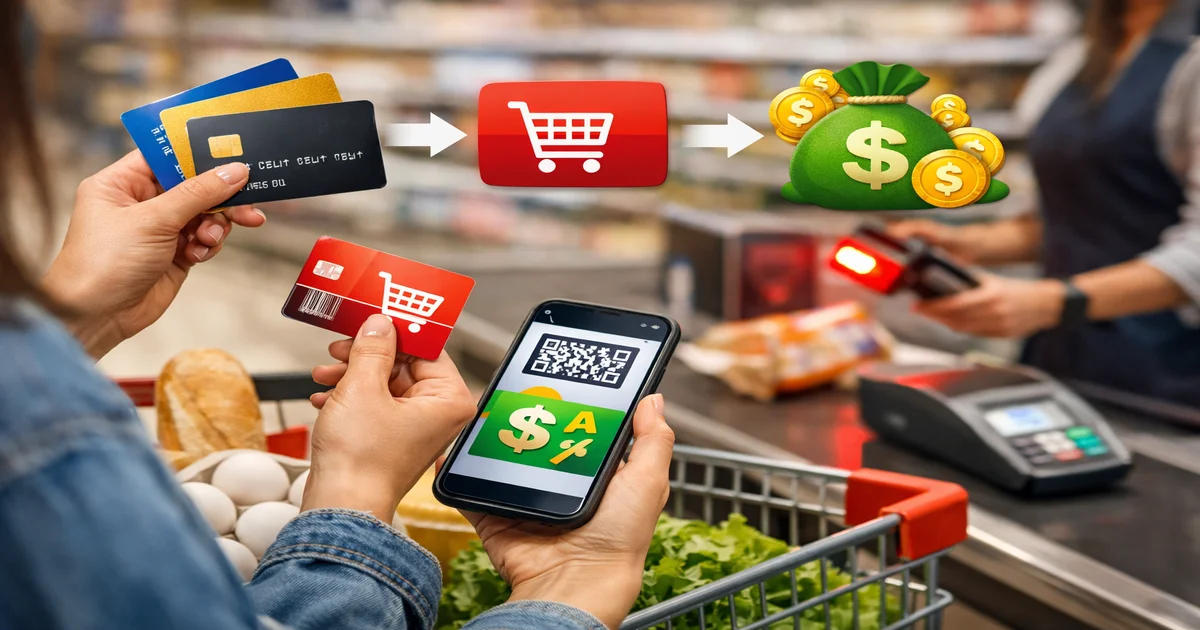
Reward stacking is using multiple programs simultaneously on the same purchase. Think of it as earning rewards from your credit card AND the store’s loyalty program AND a cashback app — all on the same transaction.
The key is finding programs that don’t conflict with each other. Some stores block certain combinations, while others actively encourage stacking.
I’ve found that most successful stacking involves three layers: a cashback credit card, the store’s loyalty program, and a third-party app like Ibotta or Rakuten.
Which Credit Cards Work Best for Grocery Stacking?
Not all credit cards are created equal for stacking. I’ve tested dozens, and these consistently deliver the highest combined returns.
The Chase Freedom Flex gives 5% back on groceries during rotating quarters, but only up to $1,500 in purchases. The American Express Blue Cash Preferred offers 6% on groceries year-round up to $6,000 annually — that’s my go-to for consistent high returns.
For everyday use outside bonus categories, the Citi Double Cash gives 2% on everything. It’s boring but reliable, and it stacks perfectly with every store program I’ve tested.
The Capital One Savor gives 3% on groceries with no rotating categories or spending caps. If you spend more than $6,000 annually on groceries, this beats the Amex after you hit the cap.
How Do Store Loyalty Programs Actually Stack?
Each major chain handles stacking differently. Understanding these differences is crucial for maximizing your returns.
Kroger’s Plus Card program is incredibly stack-friendly. You earn fuel points on every purchase, plus digital coupons, plus any credit card rewards. I regularly combine this with my Amex for 6% + fuel savings + manufacturer coupons.
Target’s Circle program works seamlessly with credit cards, but here’s what most people miss: you can use a Target RedCard for 5% off AND earn Circle rewards AND get credit card points if you use the Target Mastercard version instead of the debit version.
Safeway’s Just for U program stacks well, but their gas rewards have restrictions. You can’t combine certain manufacturer coupons with store coupons, which limits your stacking potential compared to Kroger.
What About Cashback Apps and Third-Party Programs?
This is where stacking gets really profitable. I use four apps consistently: Ibotta, Checkout51, Rakuten, and Fetch Rewards.
Ibotta offers the highest payouts but requires activating offers before shopping. I’ve earned up to $15 back on a single grocery trip by combining their offers with credit card rewards and store programs.
Checkout51 has fewer offers but they’re usually higher value. Their produce offers are particularly good — I often get $0.75 back on items I was buying anyway.
Rakuten works at some grocery stores for online pickup orders. The key is shopping through their portal for grocery pickup, then using your rewards credit card for payment.
Fetch Rewards scans any receipt and gives points for brand purchases. It’s passive income — just scan every receipt regardless of where you shopped.
Which Grocery Chains Offer the Best Stacking Opportunities?
After testing at dozens of stores, some chains are clearly more stack-friendly than others.
Kroger wins for overall stacking potential. Their digital coupons combine with manufacturer coupons, fuel points accumulate on every purchase, and they don’t restrict credit card usage. I regularly achieve 15-20% total returns during good weeks.
Target comes in second, especially if you use their Mastercard. The 5% RedCard discount, Circle rewards, manufacturer coupons, and credit card points create multiple earning streams.
Whole Foods is surprisingly good for Amazon Prime members. The 5% back with the Amazon Prime Visa, plus Prime member discounts, plus Ibotta offers can add up quickly on organic purchases.
Walmart’s stacking is limited but their everyday low prices sometimes make up for it. The Capital One Walmart card gives 5% back on Walmart.com orders, which you can combine with pickup discounts.
How to Time Your Shopping for Maximum Rewards?
Timing makes a huge difference in stacking success. I plan my major shopping around three key periods each month.
The first week of each month typically brings new Ibotta offers and Checkout51 deals. I scan all available offers and plan meals around the highest-value opportunities.
Credit card rotating categories change quarterly. When Chase Freedom or Discover announce grocery quarters, I shift my spending to maximize the 5% bonus categories.
Store sales cycles run every 6-8 weeks for most items. I track prices on staples and stock up when sale prices combine with multiple reward opportunities.
End-of-month clearance events at Target and other chains often coincide with expiring digital coupons, creating perfect stacking storms.
What Mistakes Kill Your Stacking Potential?
I’ve made every stacking mistake possible, and some are more costly than others.
The biggest error is not reading the fine print. Some credit cards exclude warehouse clubs or discount grocers from their grocery category. Your 6% Amex won’t work at Costco, and Walmart often codes as retail, not grocery.
Forgetting to activate digital offers before shopping costs me about $20 monthly when I’m not paying attention. Both store apps and cashback apps require pre-activation for most offers.
Using the wrong payment method kills stacking opportunities. Paying with cash, debit, or store gift cards often disqualifies you from credit card rewards while providing no additional benefit.
Not combining manufacturer and store coupons leaves money on the table. Most stores allow one manufacturer coupon plus one store coupon per item — that’s free stacking that requires no apps or special timing.
How Much Can You Realistically Earn from Stacking?
My results over six months show what’s actually achievable with consistent stacking.
On a typical $100 grocery trip, I average $12-15 in combined rewards. That breaks down to roughly 6% from credit cards, 3-4% from store programs, and 3-5% from apps and coupons.
During optimal weeks with bonus categories and good app offers, I’ve hit 25% total returns. But those require significant planning and only happen monthly at most.
For a family spending $500 monthly on groceries, consistent stacking should yield $60-75 in monthly rewards. That’s $720-900 annually in free money for using the same stores you already shop at.
The time investment is about 15 minutes weekly to check apps and plan around offers. For most families, that works out to over $200 per hour in effective earnings.
Which Stacking Combinations Work Best Together?
After extensive testing, certain combinations consistently outperform others.
My highest-earning combination is Amex Blue Cash Preferred (6%) + Kroger Plus Card (fuel points) + Ibotta offers + manufacturer coupons. This regularly delivers 15%+ returns on planned purchases.
For everyday shopping without planning, Citi Double Cash (2%) + Target Circle + Fetch Rewards provides consistent 4-6% returns with minimal effort.
During Chase Freedom grocery quarters, Chase Freedom Flex (5%) + any store loyalty program + Checkout51 offers creates a reliable 8-12% return stack.
The Costco Executive Membership (2%) + Costco Anywhere Visa (2% on Costco purchases) + Ibotta Costco offers can hit 6-8% on bulk purchases, though selection is limited.
How to Track Your Stacking Success?
Tracking multiple reward streams gets complicated quickly. I use a simple spreadsheet with columns for each program.
Every receipt gets logged with the base purchase amount, credit card rewards earned, store points/fuel savings, and app cashback. This shows which combinations actually deliver the highest returns.
Monthly totals reveal patterns. I discovered that my Kroger stacking averages 18% higher returns than my Target stacking, even though Target feels more rewarding day-to-day.
Annual summaries help with credit card decisions. When I calculated that grocery purchases represented 40% of my total spending, upgrading to a grocery-focused card made financial sense.
The key metric is total return percentage per store. This helps you decide where to concentrate your spending for maximum benefit.
Conclusion
Reward stacking isn’t about using every possible program — it’s about finding the right combinations that work with your shopping habits. The families earning the most rewards focus on 2-3 reliable stacking combinations rather than chasing every deal.
Start with one store where you spend the most money. Master their loyalty program, find a credit card that maximizes their category, and add one cashback app. Once that becomes routine, expand to other stores.
The biggest returns come from consistency, not complexity. Pick combinations you’ll actually use every week, and the rewards will add up faster than you expect.
Frequently Asked Questions
-
Can you use multiple cashback apps on the same purchase?
Yes, most apps track different data points and don’t conflict with each other when used simultaneously. -
Do store credit cards stack better than regular credit cards?
Sometimes, but regular cards often offer better overall rewards and more flexibility across different stores. -
What happens if you return items purchased with stacked rewards?
Credit card rewards reverse automatically, but app rewards and store points may need manual adjustment or reversal. -
Are there legal limits to how many rewards you can stack?
No legal limits, but individual programs have terms of service that may restrict certain combinations or behaviors. -
Which grocery stores don’t allow reward stacking?
Most major chains allow stacking, but some discount grocers and warehouse clubs have restrictions on certain credit cards or apps.
⚠️ Disclaimer: This article is educational and does not constitute investment, credit, tax, or legal advice. Rates, products, and regulations change. Consult a certified professional (accountant, financial advisor, lawyer, or your bank) before making decisions based on this content.