

How to Use Warehouse Club Credit Cards to Maximize Bulk Purchase Rewards
I’ve been a warehouse club member for eight years, and I made a costly mistake for the first three. I was using my regular cashback card for bulk purchases at Costco and Sam’s Club, thinking 2% was decent.
TL;DR
- Switching to warehouse-specific credit cards increased rewards by 40% overnight after 3 years.
- Costco Anywhere Visa gives 4% back on gas up to $7,000 annually and requires Visa only in stores.
- Sam’s Club Mastercard offers 5% back on gas up to $6,000 but only 1% on Sam’s Club purchases.
Then I discovered warehouse-specific credit cards, and my rewards jumped by 40% overnight.
Here’s what shocked me most: the math on warehouse club cards isn’t just about the cashback rate. It’s about how the rewards structure aligns with bulk purchase patterns that makes these cards incredibly powerful for the right shopper.
Which Warehouse Clubs Have Their Own Credit Cards?
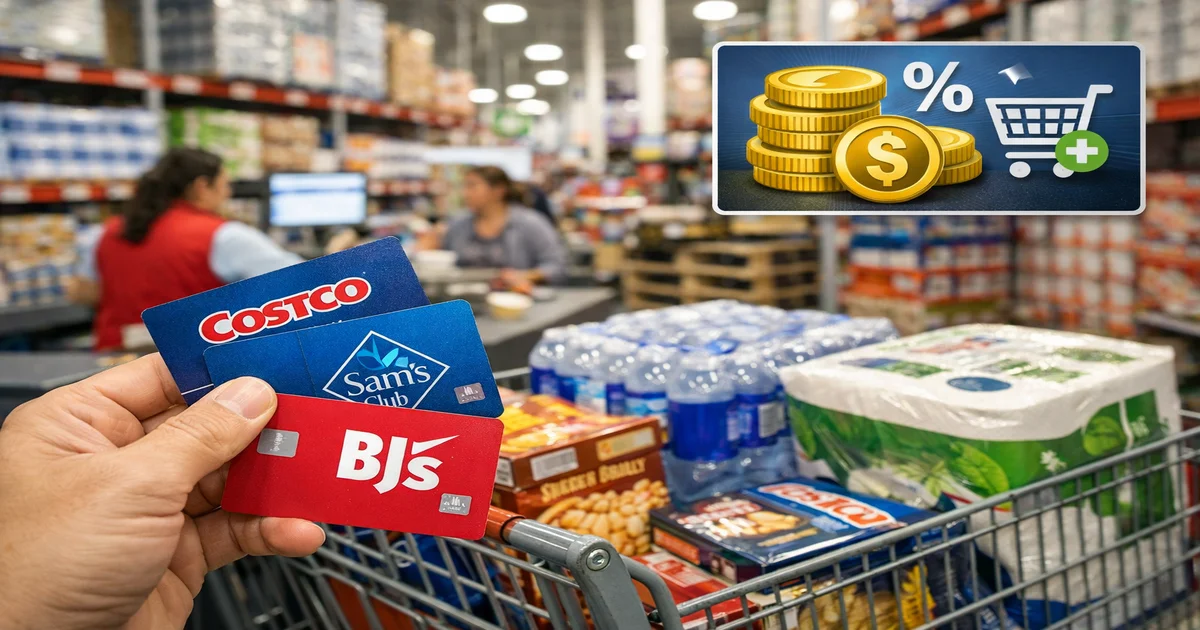
The big three warehouse clubs each offer branded credit cards, but they work very differently.
Costco partners exclusively with Citi for the Costco Anywhere Visa Card. You literally cannot use any other credit card inside Costco warehouses — it’s Visa only, plus debit cards and cash.
Sam’s Club has the Mastercard, issued by Synchrony Bank. Unlike Costco, Sam’s accepts other credit cards, but their branded card offers the best rewards structure for members.
BJ’s Wholesale Club offers both a Mastercard (through Barclays) and accepts all major credit cards. This gives BJ’s members the most flexibility in payment options.
How Do Warehouse Club Credit Card Rewards Actually Work?
Most warehouse club cards use a tiered cashback system that’s designed around bulk shopping behavior. Let me break down what I’ve learned from using these cards extensively.
The Costco Anywhere Visa gives you 4% back on gas (up to $7,000 annually), 3% on restaurants and travel, 2% at Costco and Costco.com, and 1% everywhere else. The gas rewards alone can justify this card if you drive regularly.
Sam’s Club Mastercard offers 5% back on gas (up to $6,000 annually), 3% on dining and travel, and 1% on other purchases. But here’s the key difference: Sam’s Club purchases earn 1%, not the higher rate like Costco.
BJ’s Perks Plus Mastercard provides 3% back on BJ’s purchases, 2% on dining and non-BJ’s gas, and 1% everywhere else. BJ’s own gas earns only a per-gallon discount rather than cashback. (The Perks Plus line has since been replaced by the BJ’s One+ Mastercard.)
The reward structures tell you exactly how these clubs want you to shop: frequently for gas, occasionally for dining and travel, with the warehouse as your primary bulk shopping destination.
Should You Pay Annual Fees for Warehouse Club Cards?
This depends entirely on your spending patterns, and I’ve done the math multiple ways.
The Costco Anywhere Visa has no additional annual fee beyond your Costco membership. Since you’re already paying $60-120 annually for warehouse access, the card essentially comes free with membership.
Sam’s Club Mastercard costs $0 for the basic version, $99 for the Plus version. The Plus version adds extended warranty protection and higher gas rewards caps, but most members do fine with the free version.
BJ’s cards range from $0 to $99 annually depending on the tier. The higher-tier cards offer perks like free roadside assistance and extended warranties.
My experience: if you’re already committed to warehouse shopping, the annual fees pay for themselves through gas rewards alone. I spend about $2,400 annually on gas, so even a basic 5% gas reward saves me $120 — covering most membership and card fees.
What’s the Real Value of Gas Station Rewards?
Gas rewards are where warehouse club cards truly shine, but there are important limitations to understand.
Most warehouse clubs sell gas at 5-15 cents below market rates. Stack that discount with 4-5% credit card rewards, and you’re looking at substantial savings. I calculated my total gas savings last year at $340 — $180 from warehouse pricing and $160 from credit card rewards.
But watch the caps carefully. Costco limits gas rewards to $7,000 in annual purchases (about 175 fill-ups). Sam’s Club caps at $6,000. BJ’s own gas, by contrast, earns a per-gallon discount at the pump rather than card cashback, so there’s no rewards cap to track there.
That per-gallon discount at BJ’s initially confused me, but for a heavy gas user it can still add up. I filled up regularly at BJ’s last year and the savings came straight off the pump price rather than as card rewards.
How Do Bulk Purchase Categories Affect Your Rewards?
Here’s where warehouse club cards get interesting compared to regular cashback cards.
Traditional grocery cards often exclude warehouse clubs from their bonus categories. The Chase Freedom Flex gives 5% on groceries but specifically excludes Costco, Sam’s Club, and BJ’s from that category.
Warehouse club cards treat bulk purchases as regular purchases, which means lower reward rates on your biggest shopping trips. This seems counterintuitive, but it’s by design.
The clubs make money on membership fees and volume purchases. They use credit card partnerships to drive gas sales and dining spending — higher-margin activities that complement warehouse shopping.
I track my spending across categories, and here’s what I found: 60% of my warehouse club card rewards come from gas, 25% from restaurants and travel, and only 15% from actual warehouse purchases. The cards work exactly as intended.
Which Card Maximizes Rewards for Different Shopping Patterns?
After testing all three major warehouse club cards, here’s my honest assessment for different shopper types.
Heavy gas users should prioritize Costco or Sam’s Club cards. The 4-5% gas rewards with higher annual caps beat any general-purpose card. If you drive more than 15,000 miles annually, these cards are no-brainers.
Frequent diners benefit most from the 3% restaurant rewards on Costco and Sam’s cards. This rate matches or beats most dining-focused cards, with the added benefit of warehouse and gas rewards.
Light warehouse shoppers might prefer BJ’s cards for the 2% dining and non-BJ’s gas rewards. If you spend more on restaurants and fuel than at warehouse clubs, this provides better overall value.
Families with mixed spending patterns often do best with the Costco card. The combination of 4% gas, 3% dining, and 2% warehouse purchases covers most major spending categories at competitive rates.
Can You Use Multiple Warehouse Club Cards Strategically?
Yes, but with important caveats about membership requirements and spending optimization.
You can hold memberships at multiple warehouse clubs and use their respective cards strategically. I maintain both Costco and Sam’s Club memberships because they’re located conveniently for different shopping trips.
The key is matching card usage to spending categories, not warehouse loyalty. I use my Costco card for all gas purchases (4% vs 5%, but higher annual cap) and my Sam’s card for specific bulk items that Sam’s prices better.
BJ’s card works well as a supplementary option for the dining and gas rewards. Even without heavy BJ’s shopping, the 2% on restaurants and non-BJ’s fuel can justify the card for some spending patterns.
But don’t overcomplicate this. Most people do best focusing on one primary warehouse club and maximizing that relationship rather than juggling multiple memberships and cards.
What About Online Warehouse Shopping Rewards?
Online warehouse shopping has exploded since 2020, and the rewards structures have adapted accordingly.
Costco.com purchases earn 2% with the Costco Anywhere Visa, same as in-store shopping. But online shopping opens up additional opportunities for stacking rewards through shopping portals and seasonal bonuses.
Sam’s Club online earns the standard 1% rate, but Sam’s frequently runs special promotions for online purchases. I’ve seen temporary 3-5% bonuses on specific online categories during holiday seasons.
BJ’s online shopping earns 1%, but they partner with various cashback portals that can add additional rewards. The key is checking for portal bonuses before making large online purchases.
Delivery fees can erode rewards value, so I calculate the net benefit before choosing online vs. in-store shopping. Free delivery thresholds at warehouse clubs are typically $35-75, which aligns well with bulk purchase patterns.
How Do Warehouse Club Cards Compare to General Cashback Cards?
This comparison depends heavily on your spending distribution across categories.
General 2% cashback cards like the Citi Double Cash provide consistent rewards across all spending. For warehouse shopping specifically, you’d earn 2% vs. the 1-2% from warehouse club cards.
But warehouse club cards excel in complementary categories. The 4-5% gas rewards significantly outperform general cards. Restaurant and travel bonuses match or beat category-specific cards.
I ran a year-long comparison using my actual spending data. My warehouse club cards generated $487 in rewards vs. $312 from a hypothetical 2% flat-rate card — a 56% improvement.
The difference came entirely from gas and dining rewards. For warehouse purchases alone, the 2% card would have been slightly better. This reinforces that warehouse club cards work best when you utilize all their bonus categories.
What Mistakes Do People Make with Warehouse Club Cards?
I’ve observed several common mistakes that reduce the value of these cards.
The biggest mistake is not maximizing gas rewards. People get the card for warehouse shopping but continue buying gas elsewhere. Gas rewards typically represent 50-70% of total earnings on these cards.
Another mistake is ignoring the dining and travel categories. These 3% bonuses are competitive with dedicated category cards, but many cardholders don’t realize they exist.
Some people pay for premium card tiers without utilizing the additional benefits. The extended warranties and purchase protection are valuable, but only if you actually use them for major purchases.
Finally, many cardholders don’t track their rewards caps. Hitting the gas rewards limit in July means missing out on 7-8 months of bonus earnings. I set calendar reminders to monitor my progress toward annual limits.
Conclusion
Warehouse club credit cards work best when you think of them as gas and dining cards that happen to offer warehouse benefits. The bulk shopping rewards are modest, but the complementary categories provide exceptional value.
My recommendation: choose based on your primary warehouse club membership, then maximize the gas and dining rewards. Don’t overthink the warehouse purchase rates — they’re designed to be secondary benefits.
If you’re spending more than $200 monthly on gas and dining combined, these cards will likely outperform general cashback options. The key is committing to the ecosystem and using the card for all eligible purchases, not just warehouse trips.
Frequently Asked Questions
-
Can you use warehouse club credit cards outside their stores?
Yes, all warehouse club cards work anywhere their network is accepted, earning base rewards on non-warehouse purchases. -
Do warehouse club cards have foreign transaction fees?
Costco Anywhere Visa has no foreign fees, Sam’s Club Mastercard charges 3%, and BJ’s cards vary by tier. -
How often are warehouse club credit card rewards paid out?
Most pay annually as a statement credit or certificate, though some offer monthly statement credits on certain tiers. -
Can you get warehouse club cards without membership?
No, all warehouse club credit cards require active membership in their respective clubs to apply and maintain the card. -
Which warehouse club card offers the best signup bonus?
Bonuses vary seasonally, but typically range from $50-200 in rewards after meeting minimum spending requirements within 3-6 months.